New members almost always ask the same question in their first week: why does the trainer keep putting a dumbbell in my hand instead of sitting me on a machine? Machines look safer, the seat tells you where to sit, and the pin tells you how much weight to lift. Dumbbells look like more work. They are — and that is exactly the point.
A machine fixes your position. A dumbbell teaches it.
A chest press machine locks your shoulders, elbows and grip onto a single path. It will move the weight even if one shoulder is doing all the work and the other is barely helping. A pair of dumbbells will not let you get away with that: if your left arm is weaker, the imbalance shows up immediately, because nothing is holding you straight. That feedback is uncomfortable in week one and invaluable by week four.
Two arms working independently, not one bar cheating for both
Every member has a stronger side. Barbells and machines are patient enough to let the stronger side compensate for years without anyone noticing. Dumbbells force each side of the body to do its own share of the work, which is how we catch and correct imbalances before they become the kind of back or shoulder pain that shows up years later.
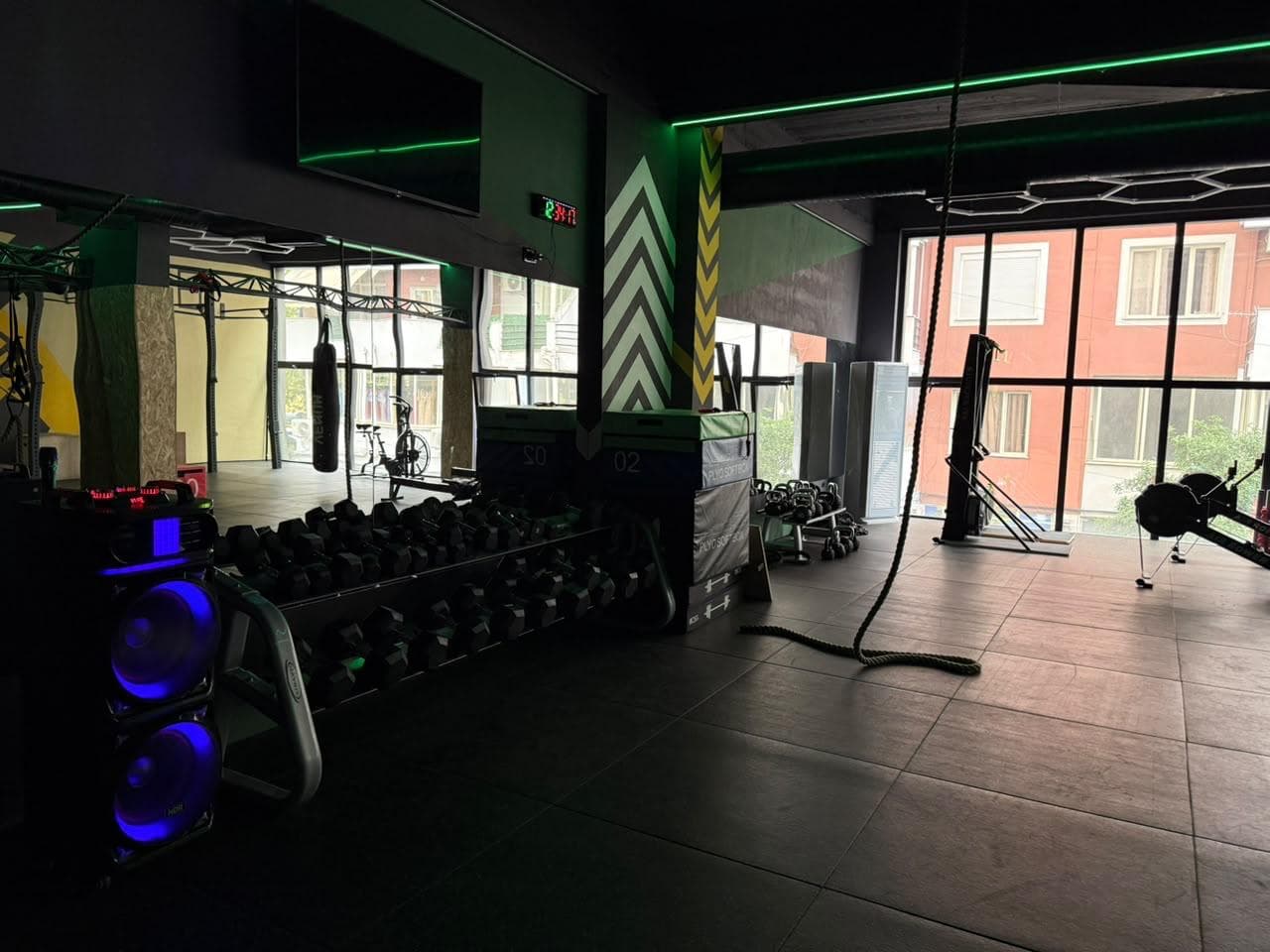
Dumbbells scale down to almost nothing
A dumbbell comes in increments of one or two kilograms. That matters more for a beginner than for anyone else, because the jump from an empty barbell to the next plate size can be too large for a first month of training, while a machine's stack often jumps in five or ten kilogram steps. Small, honest increases build confidence and keep technique intact while the weight goes up.