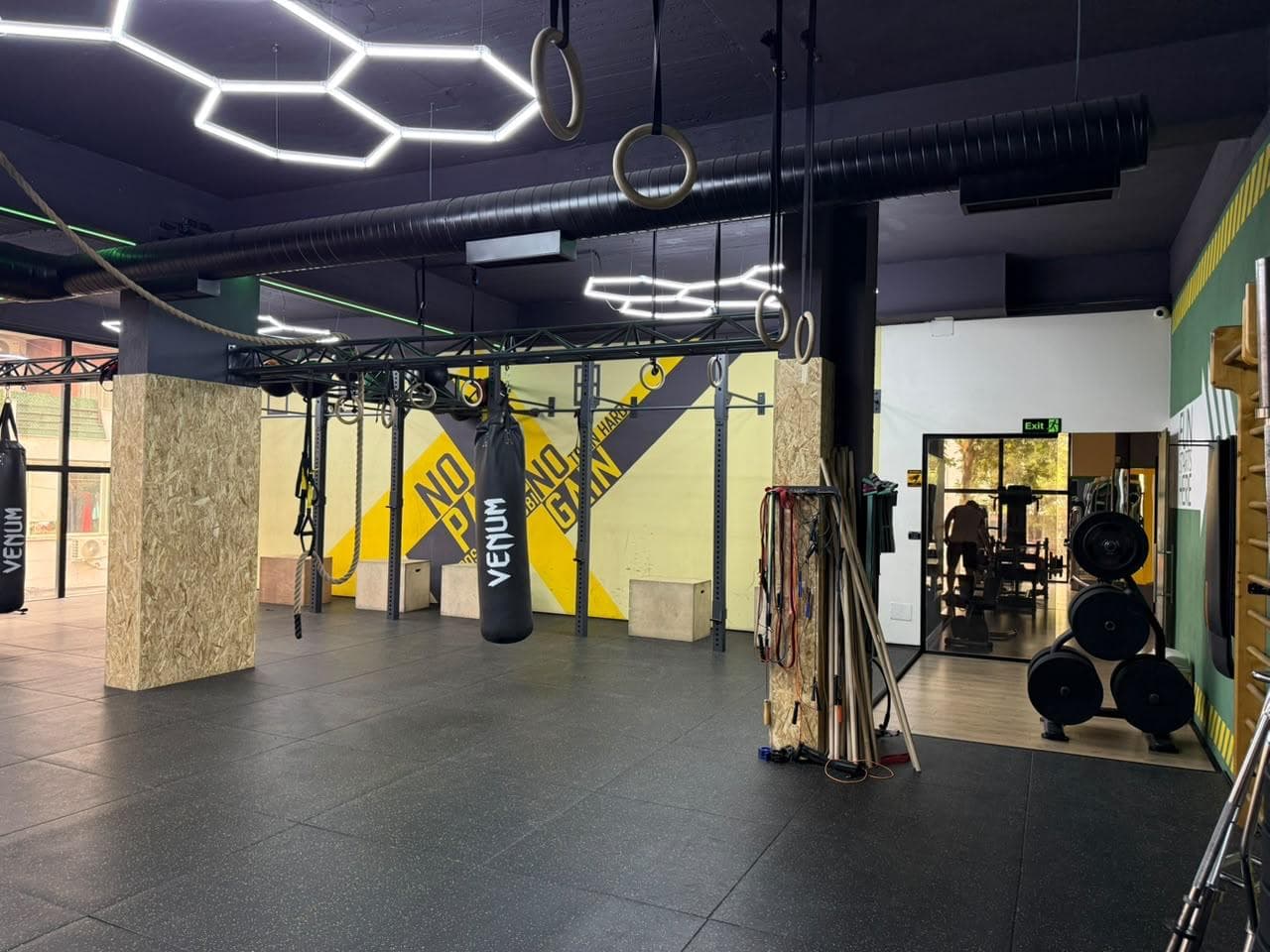
The gymnastic rings hanging against the training floor mural get a fraction of the attention the barbells do, and most members walk past them for months before ever touching them. That is a shame, because the rings train something that almost nothing else on our floor does well: genuine control of your own bodyweight, in a joint position that never sits completely still.
Why "unstable" is the entire point
A pull-up bar is fixed — your hands are locked in one position and your shoulder does the same job every rep. Rings move independently of each other and of you, which means your shoulders, forearms and core have to actively stabilise the position on every single repetition instead of relying on a fixed bar to do it for them. That constant small correction is exactly what builds the kind of shoulder stability that prevents injury in every other pressing and pulling movement you do.
Start lower than your ego wants to
The natural instinct is to jump straight to ring dips or muscle-ups because they look impressive. The actual progression starts much lower: ring rows, with your feet on the floor and your body at an angle, teaching your shoulders to stay packed and stable under load before you ask them to support your full bodyweight. Adjust the angle to make it harder by walking your feet forward, not by rushing to a harder exercise.
What rings add that a barbell cannot
A barbell bench press or overhead press is excellent for building raw pressing strength in a fixed path. Rings add the stabilising strength around that path — the small muscles that keep your shoulder in a healthy position when a barbell lift goes slightly wrong, or when you catch yourself awkwardly outside the gym. Members who add ring work alongside their normal pressing report fewer nagging shoulder issues within a couple of months, and it is usually the stabiliser strength, not the pressing strength, that gets the credit.